VIBRANTNEO 2040
A VISION AND FRAMEWORK FOR THE FUTURE OF NORTHEAST OHIO


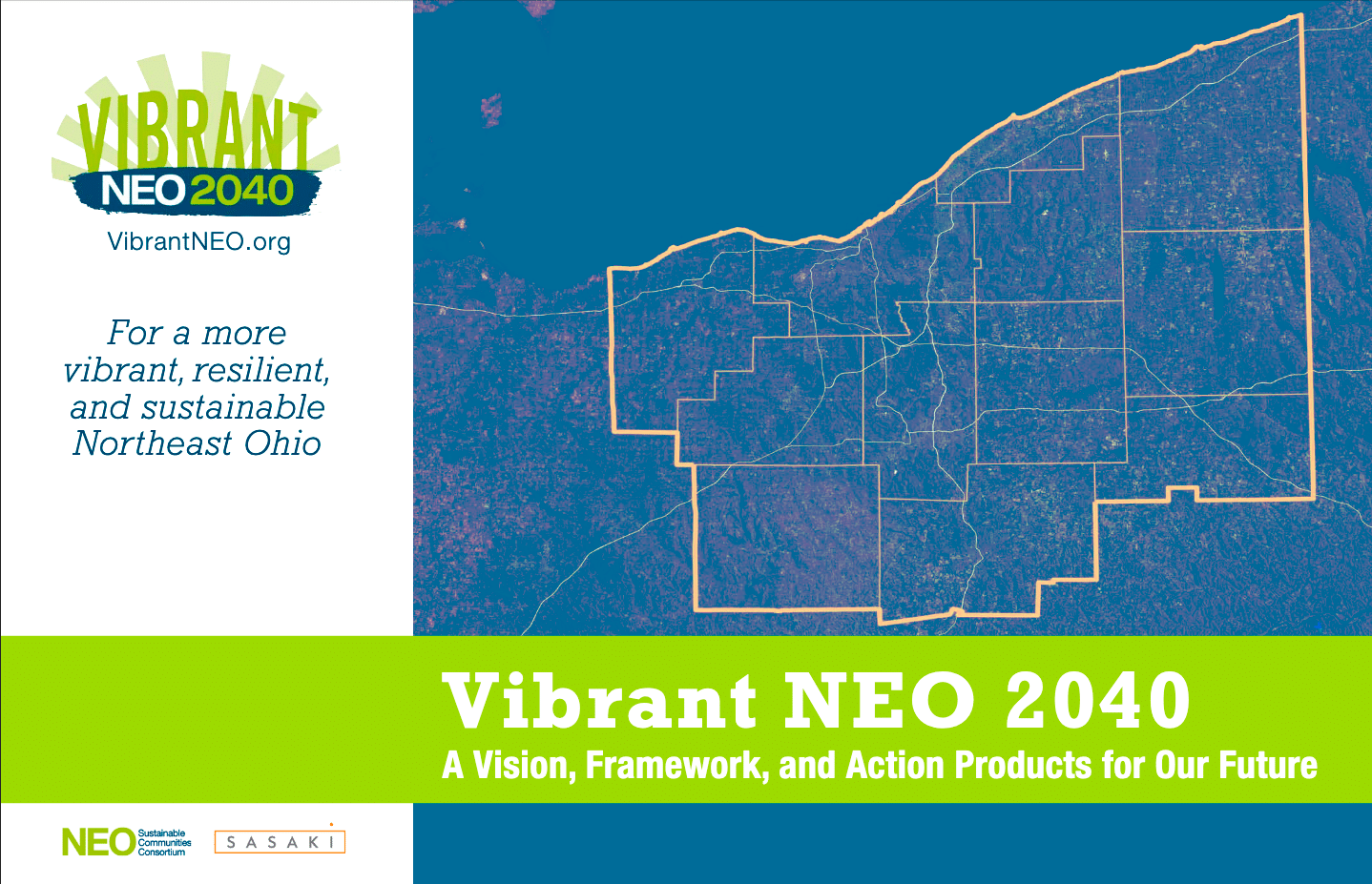
FULL REPORT NOW AVAILABLE
WATCH VIBRANT NEO: A VISION AND FRAMEWORK FOR THE FUTURE OF NORTHEAST OHIO
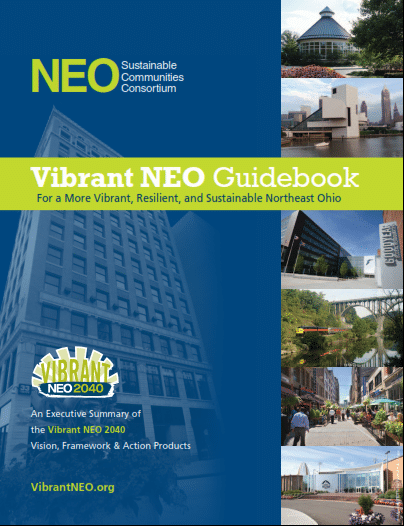
THE VIBRANT NEO GUIDEBOOK
We have developed an executive summary of the Vision, Framework and Action Products. The Vibrant NEO Guidebook describes the Process, Objectives, Recommendations, Priority Initiatives and Indicators. The document include maps of each of the major vision themes and summaries of the Action Products.
LATEST NEWS FROM THE BLOG
In May, NEOSCC will be launching an on-line engagement tool entitled Imagine MyNEO! Based on an open source software called Crowd Gauge, Imagine MyNEO! will allow the entire region to share their priorities with the Vibrant NEO process. As an introduction to the new tool, we have included an article by Sarah Madden of Sasaki Associates (our Scenario Planning consultant). It includes background about the creation of the tool and some examples of its previous use. Gauge the values, priorities and preferences of the crowd. by Sarah Madden, Sasaki Associates Web-based technology can help planners promote literacy about planning issues and increase public engagement. We already deploy sophisticated data analysis and modeling tools, but many of these tools are more suitable for back-of-house number crunching than for interactive public engagement. This divide between tools for technicians and tools for engagement is significant: despite all of the public- and client-facing communication work we do, few…
The Oberlin Project is launching another Rethink Your Ride Alternative Transportation Challenge from today through April 21. From their website 2013 Rethink Your Ride Alternative Transportation Last year during the Fall Rethink Your Ride Challenge, participants avoided over 3,700 single occupancy vehicle miles during the six-week competition. This year the Oberlin Project is coordinating this community-wide alternative transportation challenge in association with Oberlin College’s Ecolympics event for those who live, learn, work, and play in Oberlin. The Ecolympics is a competition between dorms to reduce electricity and water. In addition, there will be dozens of events aimed at education and integrating principles of sustainability into the entire Oberlin community. Transportation and housing costs can account for as much as 45% of a household income. Using alternative methods of transportation for local shopping and daily commute to work may create a healthier lifestyle, reduce transportation expense while also reducing carbon emissions….
As two of the most significant expenses in our personal lives, housing and transportation cost can play a key role in our quality of life and where we choose to live. Over the last few years a new tool has been developed by the Center for Neighborhood Technology to analyze some of these costs relative to income and geography. To integrate this way of thinking into the choices and decisions made by home buyers, renters, urban and transportation planners, and developers, CNT and our collaborative partner, the Center for Transit Oriented Development (CTOD), developed a groundbreaking tool, the Housing + Transportation Affordability Index, that measures the true affordability of housing choice-by factoring in both housing and transportation costs in a neighborhood. The cost of getting around takes a significant bite out of household budgets. The average family in the United States spends about 18% of after-tax income on transportation, but…