VIBRANTNEO 2040

A VISION AND FRAMEWORK FOR THE FUTURE OF NORTHEAST OHIO

Slide Slide VIBRANT NEO 2040 A Vision and Framework for the Future of Northeast Ohio

FULL REPORT NOW AVAILABLE

WATCH VIBRANT NEO: A VISION AND FRAMEWORK FOR THE FUTURE OF NORTHEAST OHIO
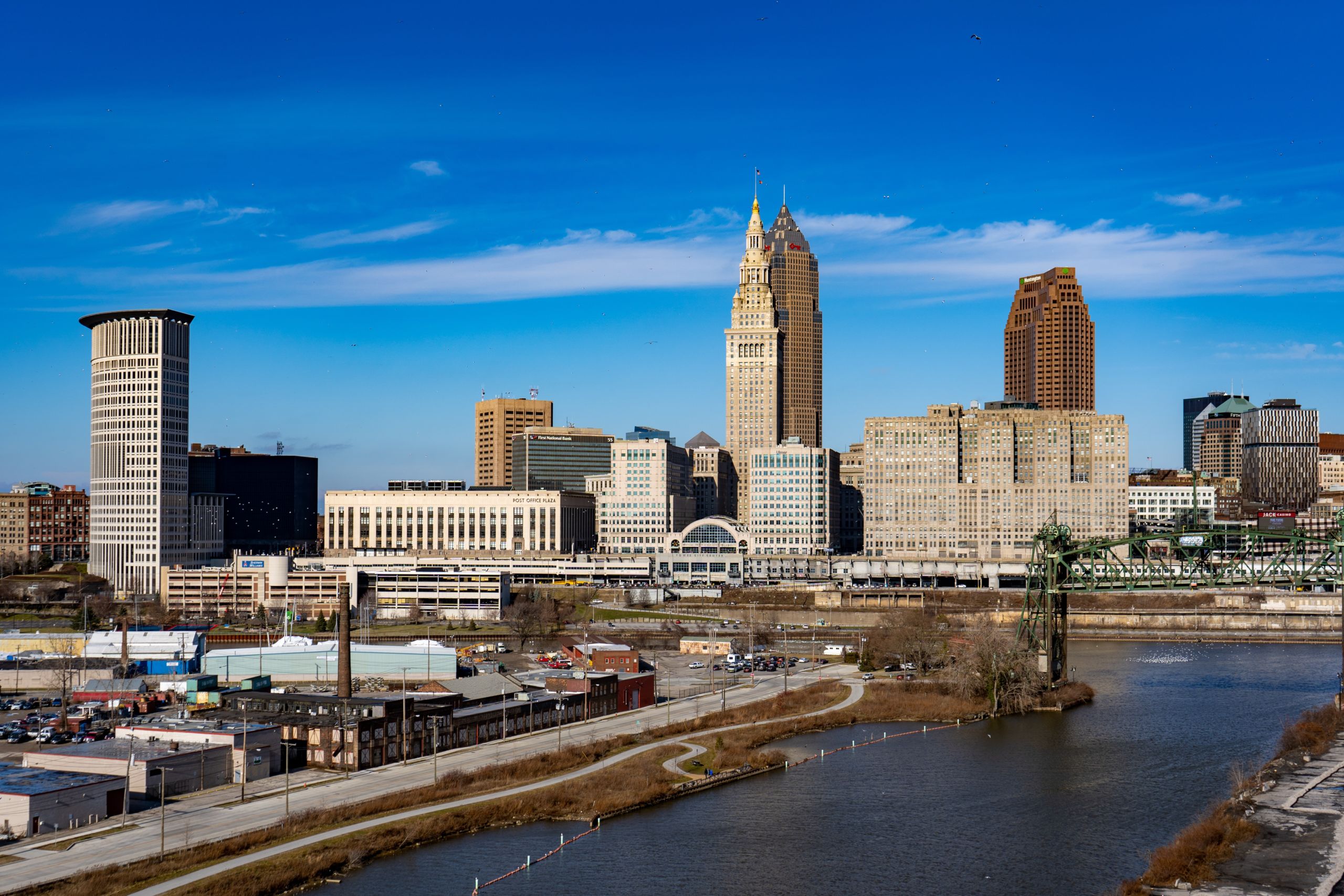
THE VIBRANT NEO GUIDEBOOK

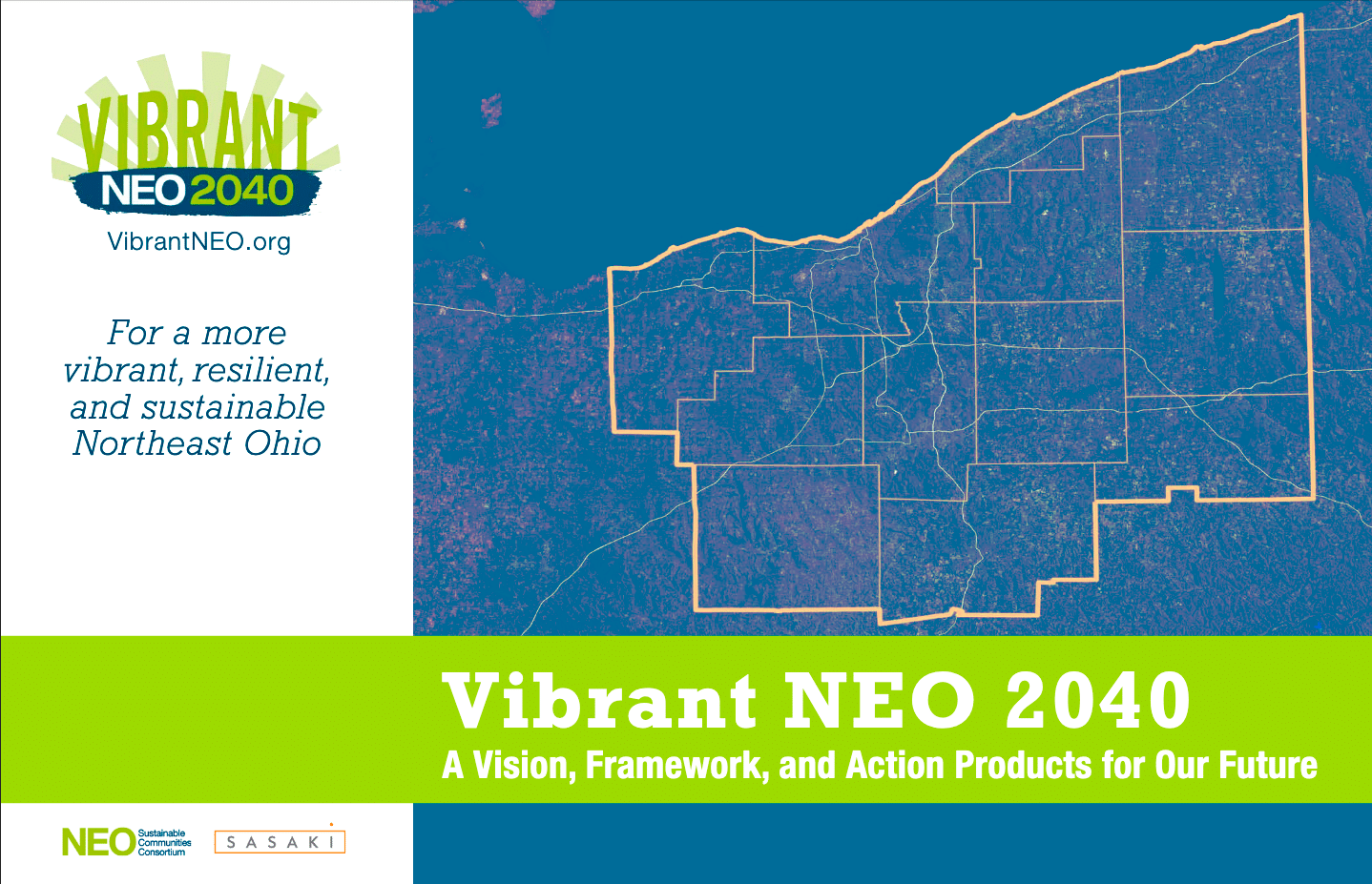
We have developed an executive summary of the Vision, Framework and Action Products. The Vibrant NEO Guidebook describes the Process, Objectives, Recommendations, Priority Initiatives and Indicators.  The document include maps of each of the major vision themes and summaries of the Action Products.
LATEST NEWS FROM THE BLOG
05 Apr: Now More Than Ever: Regional Collaboration During Covid and Beyond

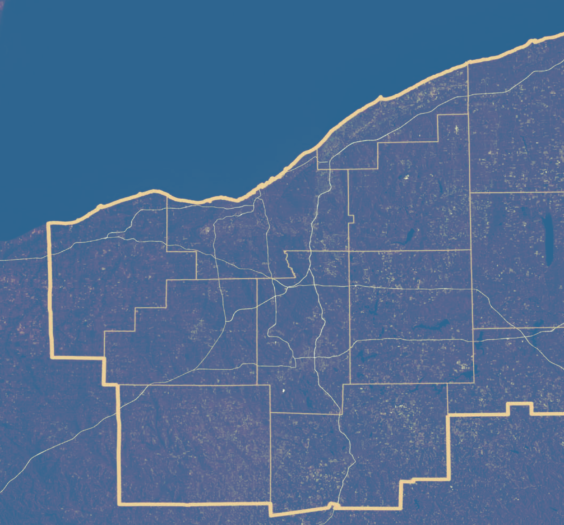
The coronavirus pandemic has forced us all to do more with less as government revenues have been reduced. Even before the pandemic though, Northeast Ohio was struggling with declining population and aging infrastructure. With current trends as of 2010, Vibrant NEO predicted that all 12 counties of Northeast Ohio would be in a worse fiscal position by 2040, with expenses exceeding revenues. To keep this from happening, one of the four key Vibrant NEO themes is “promoting collaboration and efficiency”. Working across political boundaries can help reduce costs, stabilize budgets, and improve quality of life. On April 1st, 2021, Vibrant NEO hosted a panel discussion with four elected officials, learn how they are doing just that. Bringing their years of insight were: Robert A. Fiala, Willoughby Mayor and Safety Director Jim Hockaday, Conneaut City Manager Dennis Morley, Eastlake Mayor and Safety Director Rich Regovich, Willowick Mayor and Safety Director Michelle…

14 Jan: Vibrant NEO 2040 County Reports

In 2010, leaders representing a 12-county region of Northeast Ohio recognized that our communities’ futures are intertwined and concluded that the region could be more successful if we work together to anticipate, prepare for, and build our future. The Northeast Ohio Sustainable Communities Consortium (NEOSCC) was created to determine how to achieve this goal. NEOSCC’s assignment was not to “plan” the future of Northeast Ohio—those are decisions for the leaders and residents of Northeast Ohio’s communities to make. In broad terms, NEOSCC was created to answer three questions: What course is northeast Ohio on? What future does northeast Ohio want for itself? How do we make that future a reality? Over a three year period, each of the 12-counties participating in the NEOSCC effort collected extensive amounts of data, prepared maps and conducted public engagement. The county-level data was then aggregated into a regional framework report, Vibrant NEO 2040 –…

23 Apr: APA Awards Vibrant NEO the Daniel Burnham Award

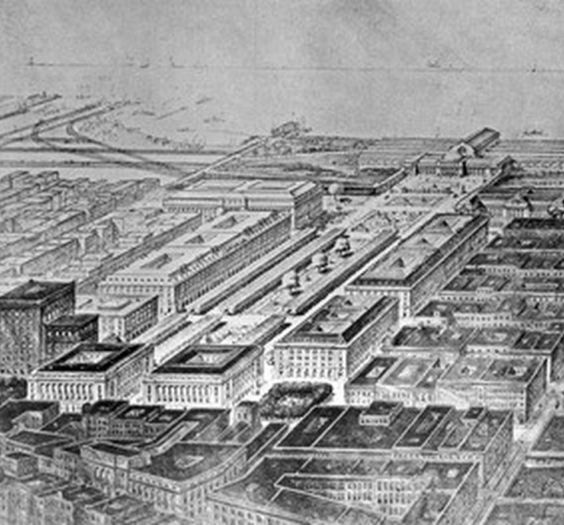
Northeast Ohio’s biggest regional planning effort in a half-century has won the planning profession’s top award for a comprehensive plan. Vibrant NEO 2040, the product of three years’ work by the nonprofit Northeast Ohio Sustainable Communities Consortium, has been awarded the 2015 Daniel Burnham Award of the American Planning Association. “It feels terrific,” Grace Gallucci, director of NOACA, the Northeast Ohio Areawide Coordinating Agency and one of the plan’s lead organizers, said about the award. “I think it helps to validate the work that NEOSCC did over the last three years . . . to say that it’s a good plan,” she said. The award is named for Chicago architect Daniel Burnham, who planned Chicago’s world-famous lakefront and also devised influential plans for other American cities, including Cleveland’s 1903 Group Plan. Gallucci said she hoped the award would add impetus to the implementation of the Vibrant NEO vision, which calls for focusing new…

27 Jan: AMATS Releases Mid-Block Crossing Analysis

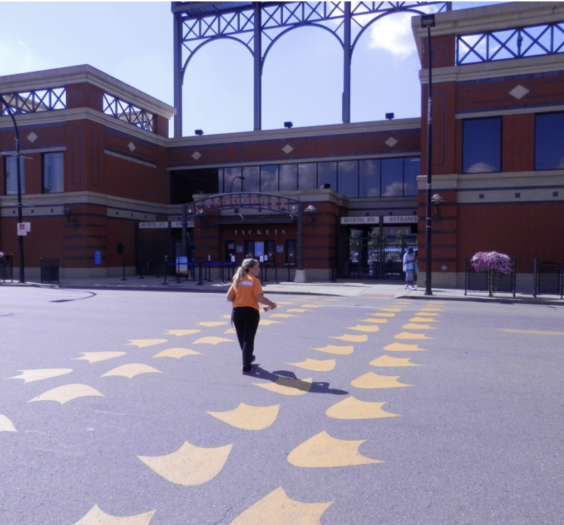
The Akron Metropolitan Area Transportation Study’s (AMATS) recently completed Mid-Block Crossing Analysis is a first-of-its kind effort by the agency to identify locations where mid-block pedestrian crossings are occurring or are likely to occur throughout the Greater Akron area.  By identifying these locations, area communities can determine where pedestrian safety improvements may be needed.   This analysis won’t be the last-of-its-kind either, according to AMATS officials.  It’s the first in a series of similar efforts to foster a new planning synergy for the region that combines new planning and design strategies for a single purpose: To improve the area’s quality of life.   Many of the locations identified in the analysis are informal crossing points at roads and streets that aren’t marked as crossings.  People prefer to cross illegally at these points rather than walk to the safety of the nearest available crosswalk.  Many do so with no problem while…

07 Dec: Greater Akron Growing Network for Sustainability

If you live in the Greater Akron and are interested in joining a growing sustainability network, you might want to check out the upcoming Greater Akron Innovation Network for Sustainability (GAINS) meeting. GAINS was launched over the last year.  The first meeting was inspired by a handful of people who are active and passionate local business owners and community members that knew each other through an organization called Entrepreneurs for Sustainability (E4S). From the organization’s Facebook page, membership is for… Anyone who wants to be part of a growing network of people who care about what happens in regards to our environment and healthy community living. We want to help our Greater Akron area grow sustainably and to make smart decisions moving into the future. We are people who want to contribute, lend a hand, offer experienced insight, and have a good time while we do it. To find out more about this growing sustainability network attend its upcoming meeting…

06 Dec: Helping Communities Realize a More Prosperous Future

The U.S. Department of Housing and Urban Development’s (HUD) Office of Sustainable Housing and Communities (OSHC) recently released its 2012 Accomplishments Report, Helping Communities Realize a More Prosperous Future, (pdf download) which highlights how grantees of the 2010 and 2011 HUD Sustainability Grants are working to support locally led collaborative efforts that are building stronger regional economies. Among the most significant findings of the report is the almost 100 percent leveraging of federal funds.  In 2010 and 2011 OSHC awarded 152 grants in 48 states, totaling $240 million. This in turn has generated almost $253 million in private investments and commitments from local partners.  The report further highlights that HUD’s Sustainable Communities grantees have brought significant local, state and private resources to the table.  HUD’s investment of $95.8 million in 2011 generated $115 million in matching and in-kind contributions – which is more than 120% of the Federal investment – from…

05 Dec: Cleveland is a pilot of the STAR Community Rating System

The City of Cleveland has been identified as a pilot of the STAR Community Rating System. In November 2012, STAR Communities launched the STAR Community Pilot Program, which taps nearly thirty leadership cities and counties in a year-long testing evaluation of the STAR Community Rating System. Local community leaders will use the STAR Community Rating System to assess how sustainable they already are, set goals for moving ahead and measure progress along the way. STAR Pilot Communities will be the first to receive a rating based on their responses using the Technical Guide, Online Reporting Tool, and associated products and services that are designed to help local communities establish and measure their own sustainability. From the STAR website… Every local place has a unique vision for a healthy environment, a strong economy and the well-being of the people living in that community. Individual governments and leaders will always address their…

NEOSCC and Vibrant NEO 2040 are largely funded by a highly competitive, first-of-its kind, $4.25M federal grant from the U.S. Department of Housing and Urban Development (HUD) as part of the Partnership for Sustainable Communities Initiative. The Sustainable Communities Initiative is an interagency collaboration among HUD, the U.S. Department of Transportation, and the U.S. Environmental Protection Agency.